
How to Wash Your Hands in the Service Industry
December 2, 2025
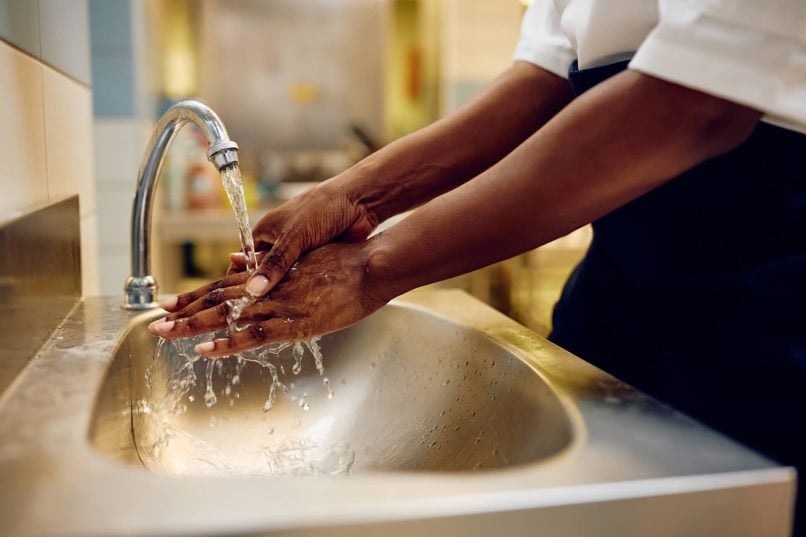
Many of the tens of millions of cases of food poisoning reported every year could have been prevented with better handwashing. Bacteria on the hands of unwell service workers can quickly travel to food contact surfaces and food before making the people who eat that food unwell.
Knowing this, you’ll realize just how crucial thorough handwashing can be. While you can learn all about handwashing in the Texas Food Handlers Card course, we’ve also provided some valuable advice for service workers to take note of below.
How to Wash Your Hands As a Food Handler
We all need a refresher on handwashing etiquette from time to time. If you’re a food handler, it’s crucial that you wash your hands and the exposed parts of your arms for at least 20 seconds. Follow these steps:
- Turn on the water and apply soap to your hands
- Rub your hands together, creating friction between your fingers, fingertips, hands, and arms for at least 10 to 15 seconds
- Rinse your hands and arms under warm, clean, running water
- Dry your hands with an air hand-drying device or a disposable towel
- Use a disposable paper towel to turn off the faucet to prevent recontaminating your hands, and another one to touch restroom door handles
When Should Food Handlers Wash Their Hands?
As a food handler, you should always thoroughly wash your hands before changing into disposable gloves and before food preparation, such as working with exposed food and unwrapping single-service items. Handwashing is also crucial when you’re changing tasks during food prep, such as working with ready-to-eat (RTE) food and switching to raw food. Doing so can prevent cross-contamination that leads to food poisoning.
If you’re doing anything to contaminate your hands, like toileting, coughing, sneezing, drinking, eating, smoking, or taking out the trash, these all warrant thorough handwashing.
How to Set Up a Handwashing Station
With so much handwashing required in the service industry, you can rightfully assume that businesses must have dedicated handwashing stations. These are specific areas with sinks that are only to be used for handwashing.
Handwashing stations should have a handwashing cleaner, such as liquid, foam, gel, or bar, and a way to dry hands.
These are the appropriate hand-drying options:
- Disposable towels
- A continuous towel system with a clean towel
- A hand-drying device with an air-knife system or heated air
Handwashing stations for food handlers must also have signage reminding employees to wash their hands in the dedicated station, as well as a waste bin for paper towel disposal.
Can You Wear Gloves in Food Service?
Alongside thorough handwashing for bare-hand contact to keep your customers safe, food handlers can also wear gloves. However, there are rules and regulations around their use.
You can only use single-use gloves for one task, like working with raw animal food or RTE food. You should always throw gloves away after removing them or if they become soiled or damaged.
Can Food Handlers Wear Nail Polish?
Nail polish can make our nails beautiful! However, unless you wear intact, good-condition gloves in your food service work, you can’t wear fingernail polish or artificial fingernails when working with any exposed foods.
What’s more, your fingernails must be maintained, trimmed, and filed to ensure the edges and surfaces are easy to clean and not rough.
Learn More About Handwashing with Help from TABC Pronto
Handwashing is integral to keeping your customers safe when you work with food in the service industry. To learn more about handwashing, complete the Texas Food Handlers Card with TABC Pronto.
Our 100% online, self-paced course is approved by the Texas Department of State Health Services. Enroll today!
See Why Thousands Trust Us for Their Texas Food Handlers and TABC Certification!
Join the many satisfied customers who rave about how simple, quick, and hassle-free our online courses are.


